 Azərbaycanca (AZ)
 Deutsch (DE)
 English (US)
 Қазақша (KZ)
 Lietuva (LT)
 සිංහල (LK)
 Türkçe (TR)
 O'zbekcha (UZ)
 中國人 (CN)
A parliamentary republic is a republic that operates under a parliamentary system of government where the executive branch (called the government in such systems) derives its legitimacy from and is accountable to the legislature (the parliament). Both executive and legislative powers are ultimately held within the parliament (fusion of powers) as most commonly the government is a subset of the members of the parliament (as opposed to congressional systems, where the congress - the legislature - is part of the government in the wider sense of the word).
There are a number of variations of parliamentary republics. Most have a clear differentiation between the head of government and the head of state, with the head of government holding real power and the head of state being a ceremonial position, similar to constitutional monarchies. In some countries the head of state has reserve powers to use at their discretion as a non-partisan "referee" of the political process. Some parliamentary republics (parliamentary republics with an executive presidency) have combined the roles of head of state and head of government, like presidential systems, but with a dependency upon parliamentary confidence.
In general, parliamentary republics grant the highest sovereign powers to the parliament. However, much like in monarchies, the head of state occupies an important formal role on the top of the legal system. The head of state, called a president (or president of the republic) in parliamentary republics, is usually elected directly by popular vote. However, there are some notable exceptions, where the president is elected by a special assembly or electoral college (e.g. Germany) or by members of parliament (e.g. Italy) in a special process.
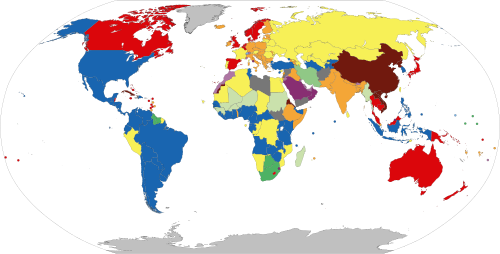
-
Parliamentary systems: Head of government is elected or nominated by and accountable to the legislature.Constitutional monarchy with a ceremonial monarchParliamentary republic with a ceremonial presidentParliamentary republic with an executive president
Presidential system: Head of government (president) is popularly elected and independent of the legislature.Presidential republic
Hybrid systems:Semi-presidential republic: Executive president is independent of the legislature; head of government is appointed by the president and is accountable to the legislature.Assembly-independent republic: Head of government (president or directory) is elected by the legislature, but is not accountable to it.
Other systems:Theocratic republic: Supreme leader is head of both the state and the faith, and holds significant executive and legislative powerSemi-constitutional monarchy: Monarch holds significant executive or legislative power but is still restricted by the constitution.Absolute monarchy: Monarch has unlimited power.One-party state: Power is constitutionally linked to a single political party.Military junta: Committee of military leaders controls the government; constitutional provisions are suspended.Governments with no constitutional basis: No constitutionally defined basis to current regime, i.e., provisional governments or Islamic theocracies.Dependent territories or places without governments
Note: this chart represents the de jure systems of government, not the de facto degree of democracy.
Fusion of powers
In parliamentary republics, both executive and legislative powers are primarily held within the parliament.
In contrast to republics operating under either the presidential system or the semi-presidential system, the head of state usually does not have executive powers as an executive president would (some may have reserve powers or additional, but limited, powers), because many of those powers have been granted to a head of government (usually called a prime minister).
In a parliamentary republic with a head of state whose tenure is dependent on parliament, the head of government and head of state can form one office (as in Botswana, the Marshall Islands, Nauru, and South Africa), but the president is still selected in much the same way as the prime minister is in most Westminster systems. This usually means that they are the leader of the largest party or coalition of parties in parliament.
In some cases, the president can legally have executive powers granted to them to undertake the day-to-day running of government (as in Iceland) but by convention, they either do not use these powers or they use them only to give effect to the advice of the parliament or head of government. Some parliamentary republics could therefore be seen as following the semi-presidential system but operating under a parliamentary system.
Historical development
Typically, parliamentary republics are states that were previously constitutional monarchies with a parliamentary system.
Following the defeat of Napoleon III in the Franco-Prussian War, France again became a republic – the French Third Republic – in 1870. The President of the Third Republic had significantly less executive powers than those of the previous two republics had. The Third Republic lasted until the invasion of France by Nazi Germany in 1940. Following the end of the war, the French Fourth Republic was constituted along similar lines in 1946. The Fourth Republic saw an era of great economic growth in France and the rebuilding of the nation's social institutions and industry after the war, and played an important part in the development of the process of European integration, which changed the continent permanently. Some attempts were made to strengthen the executive branch of government to prevent the unstable situation that had existed before the war, but the instability remained and the Fourth Republic saw frequent changes in government – there were 20 governments in ten years. Additionally, the government proved unable to make effective decisions regarding decolonization. As a result, the Fourth Republic collapsed and Charles de Gaulle was given power to rule by decree, subsequently legitimized by approval of a new constitution in a referendum on 28 September 1958, which led to the establishment of the French Fifth Republic in 1959.
Commonwealth of Nations
Since the London Declaration of 29 April 1949 (just weeks after Ireland declared itself a republic and excluded itself from the Commonwealth), republics have been admitted as members of the Commonwealth of Nations.
In the case of many republics in the Commonwealth of Nations, it was common for the Sovereign, formerly represented by a Governor-General, to be replaced by a non-executive head of state. This was the case in South Africa (which ceased to be a member of the Commonwealth immediately upon becoming a republic, and later transitioned to having an executive presidency), Malta, Trinidad and Tobago, India, Vanuatu and since 30 November 2021, Barbados. In many of these examples, the last Governor-General became the first president. Such was the case with Sri Lanka and Pakistan.
Other states became parliamentary republics upon gaining independence.
List of modern parliamentary republics and related systems
| Full parliamentary republics | ||||||
|---|---|---|---|---|---|---|
| Country/territory | Head of state | Head of state elected by | Cameral structure | Parliamentary republic adopted | Previous government form | Notes |
 Albania Albania | Bajram Begaj | Parliament, by three-fifths majority | Unicameral | 1991 | One-party state | |
 Armenia Armenia | Vahagn Khachaturyan | Parliament, by absolute majority | Unicameral | 2018 | Semi-presidential republic | |
 Austria Austria | Alexander Van der Bellen | Direct election, by two-round system | Bicameral | 1945 | One-party state (as part of Nazi Germany, see Anschluss) | |
 Bangladesh Bangladesh | Mohammed Shahabuddin | Parliament | Unicameral | 1991 | Semi-presidential republic | |
 Barbados Barbados | Jeffrey Bostic | Parliament, by two-thirds majority if there is no joint nomination | Bicameral | 2021 | Constitutional monarchy (Commonwealth realm) | |
 Bosnia and Herzegovina Bosnia and Herzegovina | Denis Bećirović Željka Cvijanović Željko Komšić | Direct election of collective head of state, by first-past-the-post vote | Bicameral | 1991 | One-party state (part of Yugoslavia) | |
 Bulgaria Bulgaria | Iliana Iotova | Direct election, by two-round system | Unicameral | 1991 | One-party state | |
 Croatia Croatia | Zoran Milanović | Direct election, by two-round system | Unicameral | 2000 | Semi-presidential republic | |
 Czech Republic Czech Republic | Petr Pavel | Direct election, by two-round system (since 2013; previously parliament, by majority) | Bicameral | 1993 | Parliamentary republic (part of Czechoslovakia) | |
 Dominica Dominica | Sylvanie Burton | Parliament, by majority | Unicameral | 1978 | Associated state of the United Kingdom | |
 Estonia Estonia | Alar Karis | Parliament, by two-thirds majority | Unicameral | 1991 | Presidential republic, thereafter occupied by a one-party state | |
 Ethiopia Ethiopia | Taye Atske Selassie | Parliament, by two-thirds majority | Bicameral | 1991 | One-party state | |
 Fiji Fiji | Naiqama Lalabalavu | Parliament, by majority | Unicameral | 2014 | Military dictatorship | |
 Finland Finland | Alexander Stubb | Direct election, by two-round system | Unicameral | 2000 | Semi-presidential republic | |
 Georgia Georgia | Mikheil Kavelashvili (disputed) | Parliament and regional delegates, by absolute majority (since 2024; previously direct election, by two-round system) | Unicameral | 2018 | Semi-presidential republic | |
 Germany Germany | Frank-Walter Steinmeier | Federal Convention (Bundestag and state delegates), by absolute majority | Two unicameral institutions | 1949 | One-party state (Nazi Germany) | |
 Greece Greece | Konstantinos Tasoulas | Parliament, by majority | Unicameral | 1975 | Military dictatorship; constitutional monarchy | |
 Hungary Hungary | Tamás Sulyok | Parliament, by majority | Unicameral | 1990 | One-party state (Hungarian People's Republic) | |
 Iceland Iceland | Halla Tómasdóttir | Direct election, by first-past-the-post vote | Unicameral | 1944 | Constitutional monarchy (in a personal union with Denmark) | |
 India India | Droupadi Murmu | Parliament and state legislature, by instant-runoff vote | Bicameral | 1950 | Constitutional monarchy (British Dominion) | |
 Iraq Iraq | Abdul Latif Rashid | Parliament, by two-thirds majority | Unicameral | 2005 | One-party state | |
 Ireland Ireland | Catherine Connolly | Direct election, by instant-runoff vote | Bicameral | 1949 | To 1936: Constitutional monarchy (British Dominion) 1936–1949: ambiguous | |
 Israel Israel | Isaac Herzog | Parliament, by majority | Unicameral | 2001 | Semi-parliamentary republic | |
 Italy Italy | Sergio Mattarella | Parliament and region delegates, by two-thirds majority; by absolute majority, starting from the fourth ballot, if no candidate achieves the aforementioned majority in the first three ballots | Bicameral | 1946 | Constitutional monarchy | Prime Minister is dependent on the confidence of both of the houses of Parliament. |
 Kosovo Kosovo | Vjosa Osmani | Parliament, by two-thirds majority; by a simple majority, at the third ballot, if no candidate achieves the aforementioned majority in the first two ballots | Unicameral | 2008 | UN-administered Kosovo (informally part of Serbia) | |
 Latvia Latvia | Edgars Rinkēvičs | Parliament | Unicameral | 1991 | Presidential republic, thereafter occupied by a one-party state | |
 Lebanon Lebanon | Joseph Aoun | Parliament | Unicameral | 1941 | Protectorate (French mandate of Lebanon) | |
 Malta Malta | Myriam Spiteri Debono | Parliament, by two-thirds majority | Unicameral | 1974 | Constitutional monarchy (Commonwealth realm) | |
 Mauritius Mauritius | Dharam Gokhool | Parliament, by majority | Unicameral | 1992 | Constitutional monarchy (Commonwealth realm) | |
 Moldova Moldova | Maia Sandu | Direct election, by two-round system (since 2016; previously by parliament, by three-fifths majority) | Unicameral | 2001 | Semi-presidential republic | |
 Montenegro Montenegro | Jakov Milatović | Direct election, by two-round system | Unicameral | 1992 | One-party state (Part of Yugoslavia, and after Serbia and Montenegro) | |
 Nepal Nepal | Ram Chandra Poudel | Parliament and state legislators | Bicameral | 2008 | Constitutional monarchy | |
 North Macedonia North Macedonia | Gordana Siljanovska-Davkova | Direct election, by two-round system | Unicameral | 1991 | One-party state (part of Yugoslavia) | |
 Pakistan Pakistan | Asif Ali Zardari | Parliament and state legislators, by instant-runoff vote | Bicameral | 2010 | Assembly-independent republic | |
 Poland Poland | Karol Nawrocki | Direct election, by two-round system | Bicameral | 1989 | One-party state | |
 Samoa Samoa | Tuimalealiifano Va'aletoa Sualauvi II | Parliament | Unicameral | 1960 | Trust Territory of New Zealand | |
 Serbia Serbia | Aleksandar Vučić | Direct election, by two-round system | Unicameral | 1991 | One-party state (part of Yugoslavia, and later Serbia and Montenegro) | |
 Singapore Singapore | Tharman Shanmugaratnam | Direct election (since 1993) | Unicameral | 1965 | State of Malaysia | |
 Slovakia Slovakia | Peter Pellegrini | Direct election, by two-round system (since 1999; previously by parliament) | Unicameral | 1993 | Parliamentary Republic (part of Czechoslovakia) | |
 Slovenia Slovenia | Nataša Pirc Musar | Direct election, by two-round system | Bicameral | 1991 | One-party state (part of Yugoslavia) | |
 Somalia Somalia | Hassan Sheikh Mohamud | Parliament | Bicameral | 2012 | One-party state | |
 Trinidad and Tobago Trinidad and Tobago | Christine Kangaloo | Parliament | Bicameral | 1976 | Constitutional monarchy (Commonwealth realm) | |
 Togo Togo | Jean-Lucien Savi de Tové | Parliament | Bicameral | 2024 | Presidential republic | |
 Vanuatu Vanuatu | Nikenike Vurobaravu | Parliament and regional council presidents, by majority | Unicameral | 1980 | British–French condominium (New Hebrides) | |
| Parliamentary republics with an executive presidency | ||||||
| Country | Head of state | Head of state elected by | Cameral structure | Parliamentary republic with an executive presidency adopted | Previous government form | Notes |
 Botswana Botswana | Duma Boko | Parliament, by majority | Unicameral | 1966 | British protectorate (Bechuanaland Protectorate) | |
 Kiribati Kiribati | Taneti Maamau | Direct election, by first-past-the-post vote | Unicameral | 1979 | Protectorate | Following a general election, by which citizens elect the members of the House of Assembly, members select from their midst "not less than 3 nor more than 4 candidates" for the presidency. No other person may stand as candidate. The citizens of Kiribati then elect the president from among the proposed candidates with first-past-the-post voting. |
 Guyana Guyana | Irfaan Ali | Semi-direct election, by first-past-the-post vote (vacancies are filled by Parliament, by majority) | Unicameral | 1980 | Full parliamentary republic | |
 Marshall Islands Marshall Islands | Hilda Heine | Parliament | Bicameral | 1979 | UN Trust Territory (part of Trust Territory of the Pacific Islands) | |
 Nauru Nauru | David Adeang | Parliament | Unicameral | 1968 | UN Trusteeship between Australia, New Zealand, and the United Kingdom. | |
 South Africa South Africa | Cyril Ramaphosa | Parliament, by majority | Bicameral | 1961 | Constitutional monarchy (Commonwealth realm) | Was a full parliamentary republic from 1961–1984; adopted an executive presidency in 1984. |
 Suriname Suriname | Jennifer Geerlings-Simons | Parliament (vacancies are filled by Parliament, by majority) | Unicameral | 1987 | Full parliamentary republic | Was a full parliamentary republic from 1975–1980; adopted an executive presidency in 1987 after the military coup period from 1980–1987, when the president was given executive powers and the prime minister title became vice-president. |
List of former parliamentary republics and related systems
| Country | Became a parliamentary republic | Status changed | Changed to | Reason for change | Notes |
|---|---|---|---|---|---|
| Full parliamentary republics | |||||
 SSR Abkhazia SSR Abkhazia | 1921 | 1931 | One-party parliamentary republic | Creation of the Abkhaz Autonomous Soviet Socialist Republic | Had a collective head of state with a distinct chairman One-party system under the Communist Party of Abkhazia |
 Abkhaz ASSR Abkhaz ASSR | 1931 | 1991 | Full parliamentary republic | Constitutional amendment | Had a collective head of state with a distinct chairman One-party system under the Communist Party of Abkhazia |
 Abkhazia Abkhazia | 1991 | 1994 | Semi-presidential republic | New constitution adopted | |
 First Republic of Armenia First Republic of Armenia | 1918 | 1920 | One-party parliamentary republic | Creation of the Armenian Soviet Socialist Republic | |
| Armenian SSR | 1920 | 1991 | Multi-party semi-presidential republic | Constitutional amendment | Had a collective head of state with a distinct chairman until 1990 One-party system under the Communist Party of Armenia |
| First Austrian Republic | 1920 | 1929 | Semi-presidential system | Constitutional amendment | |
| Azerbaijan Democratic Republic | 1918 | 1920 | One-party parliamentary republic | Creation of the Azerbaijan Soviet Socialist Republic | |
 Azerbaijan SSR Azerbaijan SSR | 1920 | 1990 | Presidential republic | Constitutional amendment | Had a collective head of state with a distinct chairman One-party system under the Communist Party of Azerbaijan |
| Belarusian Democratic Republic | 1918 | 1920 | One-party parliamentary republic | Creation of the Byelorussian Soviet Socialist Republic | |
 Byelorussian SSR Byelorussian SSR | 1920 | 1991 | Full parliamentary republic | Constitutional amendment | Had a collective head of state with a distinct chairman until 1990 One-party system under the Communist Party of Byelorussia |
| Belarus | 1991 | 1994 | Presidential republic | New constitution adopted | |
 Brazil Brazil | 1961 | 1963 | Presidential system | Referendum | |
| Burma (present-day Myanmar) | 1948 | 1962 | Military dictatorship | 1962 Burmese coup d'état | |
 Chile Chile | 1891 | 1924 | Military junta | 1924 Chilean coup d'état | |
| 1925 | 1925 | Presidential system | New constitution | ||
 Republic of China Republic of China | 1947 | 1949 | One-party parliamentary republic. | Chinese Civil War | One-party system under the Chinese Communist Party (Mainland China). Provisions for parliamentary system "temporarily" suspended during martial law period on Taiwan. 1947 Constitution remains active only on the ROC-controlled territories but amendments in 1991 use the semi-presidential system. |
| First Czechoslovak Republic | 1920 | 1939 | One-party state | Munich agreement | |
| Third Czechoslovak Republic | 1945 | 1948 | One-party parliamentary republic | Coup d'état | |
| Fourth Czechoslovak Republic | 1948 | 1989 | Multi-party parliamentary republic | Velvet Revolution | One-party system under the Communist Party of Czechoslovakia |
| Fifth Czechoslovak Republic | 1989 | 1992 | State dissolved | Velvet Divorce | |
| State of East Indonesia | 1946 | 1950 | State dissolved | Merged to the Republic of Indonesia | |
| First Republic of Estonia | 1920 | 1934 | One-party parliamentary republic | 1934 Estonian coup d'état | In June 1940, Estonia was occupied and annexed by the Soviet Union. |
| 1934 | 1938 | One-party presidential republic | New constitution adopted | ||
 French Third Republic French Third Republic | 1870 | 1940 | Puppet state | World War II German occupation | |
| French Fourth Republic | 1946 | 1958 | Semi-presidential system | New constitution adopted | |
| Democratic Republic of Georgia | 1918 | 1921 | One-party parliamentary republic | Creation of the Georgian Soviet Socialist Republic and the Socialist Soviet Republic of Abkhazia | |
| Georgian SSR | 1921 | 1991 | Multi-party semi-presidential republic | Constitutional amendment | Had a collective head of state with a distinct chairman until 1990 One-party system under the Communist Party of Georgia |
| Guyana | 1970 | 1980 | Assembly-independent republic | New constitution adopted | |
| Hungary | 1946 | 1949 | One-party state | Creation of the People's Republic of Hungary | |
 Indonesia Indonesia | 1945 | 1959 | Presidential parliamentary system | Presidential constitution reinstated | |
| Israel | 1948 | 1996 | Semi-parliamentary system | Constitutional amendment | |
 Democratic Kampuchea Democratic Kampuchea | 1976 | 1979 | One party parliamentary republic | Capture of Phnom Penh | One-party system under the Communist Party of Kampuchea |
| People's Republic of Kampuchea | 1979 | 1992 | Transitional government, then constitutional monarchy | United Nations Security Council Resolution 745 | One-party system under the Kampuchean People's Revolutionary Party |
 Kenya Kenya | 2008 | 2013 | Presidential system | New constitution and elections | A separate Prime Minister existed between 2008 and 2013 The switch to a fully presidential system was legislated in 2010, but only took effect in 2013. |
 Second Republic of Korea Second Republic of Korea | 1960 | 1961 | Military junta | 16 May coup | |
| Kazakh SSR | 1936 | 1990 | Presidential republic | Constitutional amendment | Had a collective head of state with a distinct chairman One-party system under the Communist Party of Kazakhstan |
| Kirghiz SSR | 1936 | 1990 | Presidential republic | Constitutional amendment | Had a collective head of state with a distinct chairman One-party system under the Communist Party of Kirghizia |
 Kyrgyzstan Kyrgyzstan | 2010 | 2021 | Presidential republic | Referendum | The 2010 Constitution of Kyrgyzstan introduced a parliamentary system to the country while remaining a de facto semi-presidential republic, with the President retaining many forms of executive powers such as appointing a Prime Minister as the head of government. The decision was subjected to a parliamentary vote of confidence. |
| First Republic of Latvia | 1922 | 1934 | One-party parliamentary republic | 1934 Latvian coup d'état | In June 1940, Latvia was occupied and annexed by the Soviet Union. |
| 1934 | 1940 | State dissolved | World War II Soviet occupation | ||
| First Republic of Lithuania | 1920 | 1926 | One-party state | 1926 Lithuanian coup d'état | In June 1940, Lithuania was occupied and annexed by the Soviet Union. |
| Lithuania | 1990 | 1992 | Multi-party semi-presidential republic | New constitution adopted | In February 1993, Lithuania holds its first presidential election since the state re-established. |
| Moldavian SSR (present-day Moldova) | 1940 | 1990 | Multi-party semi-presidential republic | Constitutional amendment | Had a collective head of state with a distinct chairman One-party system under the Communist Party of Moldavia |
 Nigeria Nigeria | 1963 | 1966 | Military dictatorship (which led in 1979 to the democratic, presidential Second Nigerian Republic) | Coup d'état | |
 Myanmar Myanmar | 2016 | 2021 | Military dictatorship | 2021 Myanmar coup d'état | De jure Assembly-independent republic, de facto Parliamentary republic |
| Pakistan | 1956 | 1958 | Military dictatorship | 1958 Pakistani coup d'état | |
| 1973 | 1978 | 1977 Pakistani coup d'état | |||
| 1997 | 1999 | 1999 Pakistani coup d'état | |||
| 2002 | 2003 | Assembly-independent republic | Constitutional amendment | ||
| Second Polish Republic | 1919 | 1935 | Presidential system | New constitution adopted | |
 First Portuguese Republic First Portuguese Republic | 1911 | 1926 | Military dictatorship (which led in 1933 to the Estado Novo one-party presidential republic) | 28 May coup | |
| First Philippine Republic (Malolos Republic) | 1899 | 1901 | Military dictatorship (De facto United States Colony) | Capture of Emilio Aguinaldo to the American forces | |
 Fourth Philippine Republic Fourth Philippine Republic | 1973 | 1981 | Semi-presidential system (de facto Military dictatorship under Martial Law between 1972 and 1986.) | Constitutional amendment | |
| Republic of the Congo | 1960 | 1965 | Military dictatorship (De facto one-party state) | 1965 Congolese coup d'état | |
| Rhodesia | 1970 | 1979 | Parliamentary system | Creation of Zimbabwe-Rhodesia | Political rights were restricted to the white minority |
| Russian SFSR | 1917 | 1991 | Multi-party semi-presidential republic | Referendum | |
 Soviet Union Soviet Union | 1922 | 1990 | Multi-party semi-presidential republic | Constitutional amendment | Had a collective head of state with a distinct chairman until 1989 One-party system under the Communist Party of the Soviet Union |
| First Spanish Republic | 1873 | 1874 | Constitutional monarchy | Restoration of the monarchy | |
| Second Spanish Republic | 1931 | 1939 | One-party state (which declared itself a constitutional monarchy in 1947) | Coup d'état | |
| Suriname | 1975 | 1987 | Assembly-independent republic | New constitution adopted | |
 Sri Lanka Sri Lanka | 1972 | 1978 | Semi-presidential system | New constitution adopted | |
 Syrian Republic Syrian Republic | 1930 | 1958 | State dissolved | Creation of the United Arab Republic | Merged into the United Arab Republic, which operated as a One-party presidential system |
| Syrian Arab Republic | 1961 | 1963 | One-party presidential system | 1963 Syrian coup d'état | |
| 1991 | Semi-presidential system | Constitutional amendment | |||
| Transvaal Republic | 1852 | 1902 | Colony of the British Empire | Second Boer War | |
| Tajik SSR | 1929 | 1990 | Presidential republic | Constitutional amendment | Had a collective head of state with a distinct chairman One-party system under the Communist Party of Tajikistan |
 Turkey Turkey | 1923 | 2018 | Presidential system | Referendum | |
| Turkmen SSR | 1925 | 1990 | Presidential republic | Constitutional amendment | Had a collective head of state with a distinct chairman One-party system under the Communist Party of Turkmenistan |
 Uganda Uganda | 1963 | 1966 | One-party state | Suspension of the constitution | |
| Ukrainian People's Republic | 1917 | 1918 | Client state | 1918 Ukrainian coup d'état | |
| 1918 | 1919 | One-party parliamentary republic | Creation of the Ukrainian Soviet Socialist Republic | ||
| 1921 | State dissolved | Treaty of Riga | |||
 Ukrainian SSR Ukrainian SSR | 1919 | 1991 | Multi-party semi-presidential republic | Constitutional amendment | Had a collective head of state with a distinct chairman until 1990 One-party system under the Communist Party of Ukraine |
| Uzbek SSR | 1924 | 1990 | Presidential republic | Constitutional amendment | Had a collective head of state with a distinct chairman One-party system under the Communist Party of Uzbekistan |
 Yugoslavia Yugoslavia | 1945 | 1953 | Parliamentary republic with an executive presidency | Constitutional amendment | Had a collective head of state with a distinct chairman One-party system under the Communist Party of Yugoslavia |
 Zimbabwe Rhodesia Zimbabwe Rhodesia | 1979 | 1979 | Dependent territory | Reversion to Southern Rhodesia | |
 Zimbabwe Zimbabwe | 1980 | 1987 | Presidential system | Constitutional amendment | |
| Parliamentary republics with an executive presidency | |||||
| Country | Became a parliamentary republic with an executive presidency | Status changed | Changed to | Reason for change | Notes |
 Gambia Gambia | 1970 | 1982 | Presidential system | Constitutional amendment | The president was elected semi-directly by a constituency-based double simultaneous vote, with vacancies filled by Parliament; a motion of no confidence automatically entailed snap parliamentary elections. Presidential elections were made fully direct and separate from parliamentary elections in 1982. |
| Indonesia | 1959 | 2001 | Presidential system | Constitutional amendment | As defined by the original Constitution of 1945 (reinstated under the Presidential Decree of 5 July 1959), this was finally changed during the amendments of 2001, occurring just months after the ousting of Abdurrahman Wahid. The first direct presidential election was held in 2004. |
 Iran Iran | 1979 | 1989 | Presidential system under an Islamic theocracy | Constitutional amendment | The Supreme Leader of Iran was established on 3 December 1979 following the Iranian Revolution to function as the country's head of state. Both the president and prime minister, which was retained under the former monarchy, were simultaneously the co-heads of government, but they answer to the Supreme Leader. The post of the prime minister was dropped in 1989 leaving the president as the sole head of government. |
| Kenya | 1964 | 2008 | Full parliamentary system | Coalition and power-sharing | Originally, the president was elected semi-directly by a constituency-based double simultaneous vote, with vacancies filled by Parliament; a motion of no confidence automatically entailed either the resignation of the president or snap parliamentary elections. Presidential elections were made fully direct in 1969, including after a vacancy, but their schedule remained linked to the parliamentary elections. A separate Prime Minister existed between 2008 and 2013. |
| Yugoslavia | 1953 | 1963 | Assembly-independent republic | New constitution | One-party system under the League of Communists of Yugoslavia |
| Assembly-independent systems | |||||
| Country | Became an assembly- independent republic | Status changed | Changed to | Reason for change | Notes |
 First Republic of Ghana First Republic of Ghana | 1960 | 1966 | Military dictatorship (Which led to the fully parliamentary Second Republic of Ghana) | Coup d'état | |
| Pakistan | 1985 | 1997 | Full parliamentary republic | Constitutional amendment | |
| 2003 | 2010 | Constitutional amendment | |||
 Serbia and Montenegro Serbia and Montenegro | 1992 | 2000 | Semi-presidential republic | Constitutional amendment | |
| Tanganyika | 1962 | 1964 | State dissolved | Creation of the United Republic of Tanzania | Merged into the United Republic of Tanzania, which operated as a One-party presidential system |
| Yugoslavia | 1963 | 1980 | Directorial republic | New constitution and the death of Josip Broz Tito | One-party system under the League of Communists of Yugoslavia The change to a directorial system was legislated in 1973, but only took effect in 1980. |
| Directorial systems | |||||
| Yugoslavia | 1980 | 1992 | — | Breakup of Yugoslavia | One-party system under the League of Communists of Yugoslavia |
See also
- List of countries by system of government
- Constitutional monarchy
- Parliamentary system
- Republic
- Republicanism
- Semi-presidential system
- Semi-parliamentary system
- Parliamentary republics with an executive presidency
wikipedia, wiki, encyclopedia, book, article, read, free download, Information about parliamentary republic. What is parliamentary republic? What does parliamentary republic mean?